
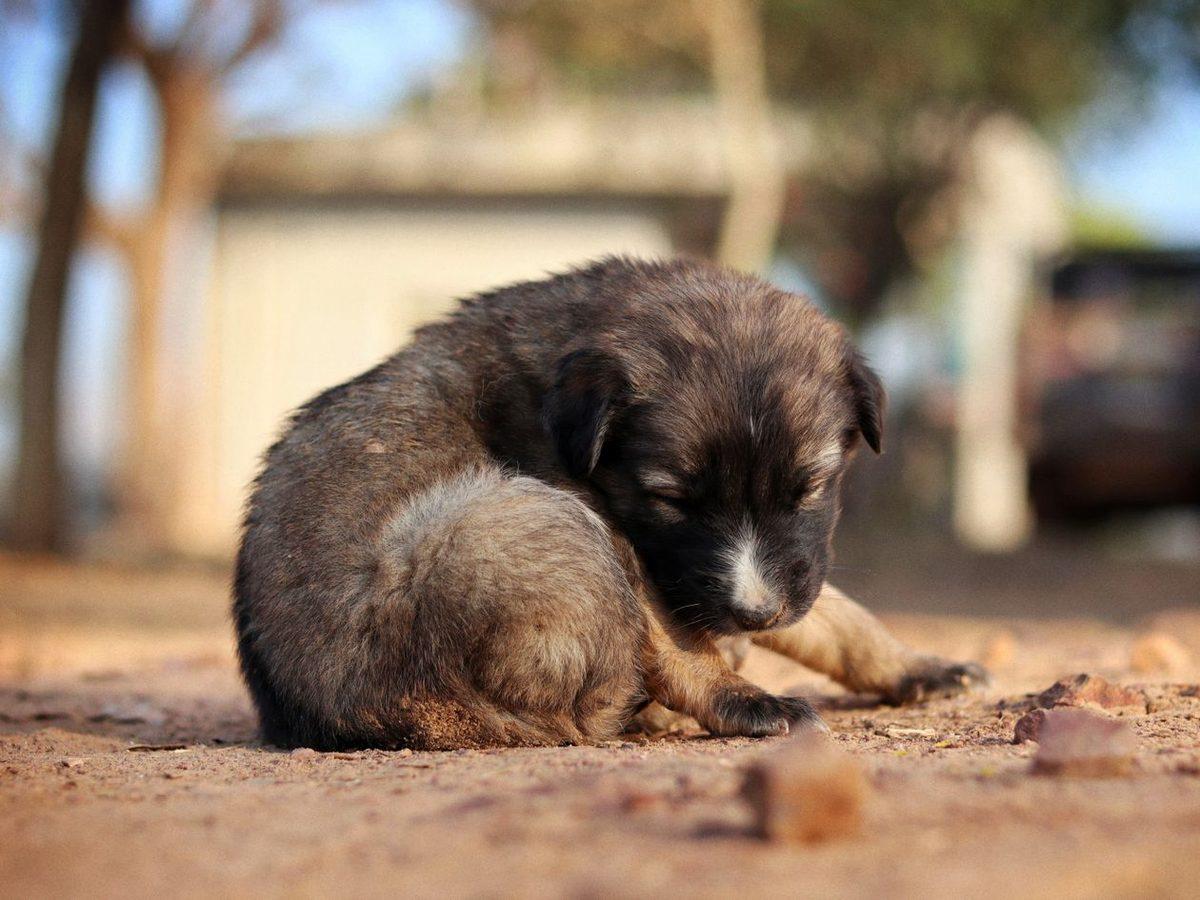
Category fears are among the most common puppy fears — and among the most fixable, because the feared thing is predictable and controllable. Puppies fear what is underrepresented in their early experience: deeper voices, larger frames, hats that change the human outline. This plan rewires the association while keeping the puppy firmly in charge of distance.
The Plan: Step by Step
Set the golden rule: no reaching, no looming
The feared person never approaches, reaches for, or stares at the puppy. They exist in the environment, sideways-on, ignoring the puppy completely. Pressure is what converts caution into a lasting fear memory.
Run treat rain
When the person appears at a comfortable distance, treats rain from you (not from the person — food from a scary hand creates approach-avoidance conflict). Person leaves, rain stops. Ten short sessions beat one long one.
Let the puppy close the distance
Over days, most puppies begin investigating on their own. Let them sniff and retreat freely. The person stays boring: no sudden pets when the puppy finally approaches — a hand descending is the exact moment that ruins brave puppies.
Generalize across the category
One safe man does not cure "men." Rotate helpers: different builds, voices, hats on and off, uniforms if relevant. Each new example starts at easy distance. The category, not the individual, is what you are reclassifying.
Add the object work for hats and gear
Hats, helmets, and hoods get their own ladder: the item on the floor with treats around it, then held, then worn by a trusted person at distance, then by others. Changing the human silhouette is genuinely strange to a puppy — treat it as its own skill.
Why Categories Form
Puppy brains generalize from samples. If the early sample of men was small or zero, the category files as "unknown, possibly unsafe." This is a data problem, not a trauma problem, in most puppies — which is why data fixes it. Fear that includes lunging, hard barking with forward body language, or panic deserves a certified trainer, as the protocol distances and timing need professional calibration.
Mistakes to Avoid
- Handing the puppy to the feared person "so they bond." Forced contact is the top cause of entrenched people fears.
- The person feeding treats from their hand too early, luring the puppy into range and then looming.
- Correcting barking at people — it suppresses the warning and leaves the fear.
Related Guides
Frequently Asked Questions
How long does it take to fix a category fear?
Mild caution in a young puppy: often visible improvement within a week, solid change in two to three. Strong fear with barking and lunging takes longer and merits a trainer. Track your puppy's comfortable distance — its steady shrinking is the scoreboard.
My puppy is fine with men at home but scared outside. Why?
Context changes everything for puppies: home men are known individuals; outside men are the category. Run the same protocol outdoors at distance. Generalization across locations is a separate step for almost every skill and fear.
Should the scary person eventually pet my puppy?
Only when the puppy solicits it — approaching with a loose, wiggly body and staying for contact. Then: chest scratch, brief, stop and let the puppy re-ask. Consent-based petting converts a tolerated person into a liked one.
What if my puppy's fear is of children specifically?
Children are louder, faster, and less predictable, so the protocol adds distance and uses calm, seated, coached children only — never a crowd of excited kids. Many puppies do best admiring children from afar permanently; that is an acceptable outcome, not a failure.