
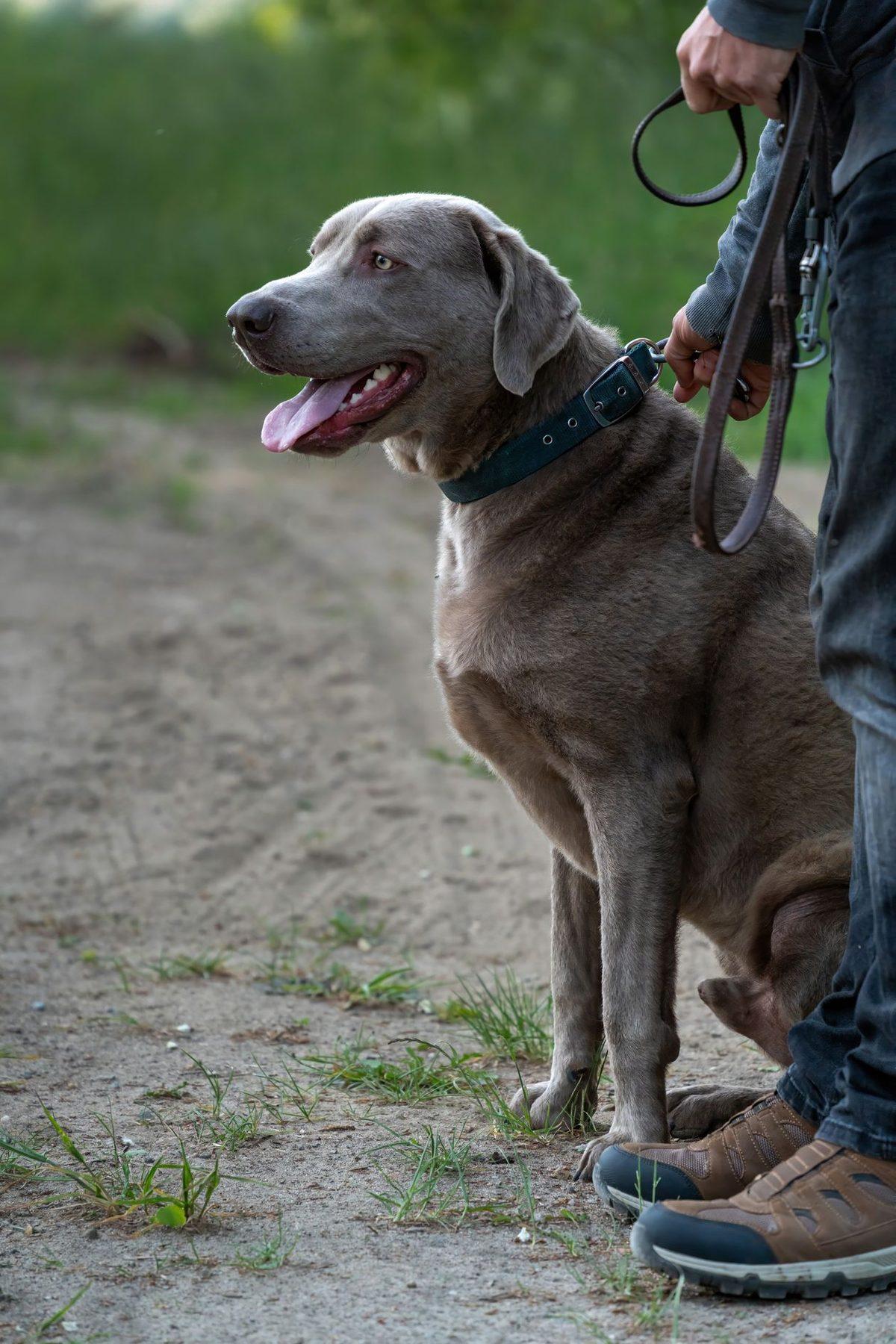
"Stubborn" is the label puppies get when their communication is being misread. A puppy who sits, lies down, or pulls toward home is giving you data about their emotional or physical state. This guide works through the differential diagnosis in order, then gives you the confidence-rebuilding protocol for each cause.
The Plan: Step by Step
Rule out discomfort first
Check harness fit (two fingers, no armpit rubbing), paw pads for cuts or lodged grit, nails, and the temperature of the ground. Watch the gait: any limping, bunny-hopping, or stiffness after rest is a vet visit before it is a training plan. Growing puppies also get genuinely tired — refusal at the end of a long walk is often just an empty tank.
Check for overwhelm
Refusal at the same location, refusal facing one direction, ears back, tail tucked, panting out of proportion to heat — that is a puppy over threshold. The world got too big too fast. Distance from the trigger and a calmer route are the immediate fix.
Check for confusion
Young puppies refuse when leash pressure confuses them: the leash tightens, they freeze or fight it, nothing makes sense. Rebuild indoors with the treat-at-the-seam game until moving with you on a loose leash is a known, paying behavior.
Rebuild with the puppy in charge of pace
Crouch sideways, wait, reward a step, then another. Let the puppy investigate at their speed. Short outings that end before refusal occurs rebuild the association that walks are safe and interesting. If your puppy will follow a treat trail or a favorite person, use that as scaffolding, then fade it.
Change one variable at a time
New route, or longer walk, or busier time — never all three. Puppies refuse when the difficulty budget is overspent. Keep a simple walk log for a week: route, distance, where refusal happened. The pattern usually names the cause for you.
The Stubborn Myth
Dogs do not refuse out of spite — spite requires a theory of mind puppies do not have. What owners call stubbornness decomposes, on inspection, into fear, discomfort, confusion, distraction, or exhaustion, each with a different fix. The habit of asking "what is my puppy experiencing?" instead of "why won't they obey?" is the single biggest upgrade in a puppy owner's skill set.
Mistakes to Avoid
- Dragging the puppy forward by the leash — injures necks, deepens fear, and teaches that walks are where bad things happen.
- Carrying the puppy past every hard spot forever; scaffolding should fade as confidence grows.
- Forcing longer walks to "build stamina" in a puppy whose refusal was fatigue or pain.
Related Guides
Frequently Asked Questions
My puppy walks fine going out but refuses coming home — or the reverse. Why?
Direction-specific refusal is meaningful. Refusing toward home usually means the walk is the highlight of the day and ending it is a loss — add a fun ritual at home after walks. Refusing away from home suggests the outside world (or something on the route) worries them; shrink the route and rebuild.
How long should I wait out a refusal?
Give it a minute or two of patient, sideways, unpressured waiting with occasional rewards for any step. If nothing comes, cheerfully turn back or carry a small puppy — ending without conflict preserves the training. Forcing a breakthrough in one session costs more than it gains.
Could refusal be a sign of illness?
Yes — new or worsening reluctance to walk, especially with appetite change, stiffness, or lethargy, deserves a vet check. Puppies cannot report pain; behavior change is often the first and only symptom. Rule out the body before training the behavior.
My puppy refuses only on certain surfaces. What is that?
Surface sensitivity — slippery floors, grates, shiny tiles, hot pavement — is common and rational. Check paw comfort and temperature, then desensitize gradually with treats on the edge of the surface. Never drag a puppy across a surface they fear; the category generalizes fast.