
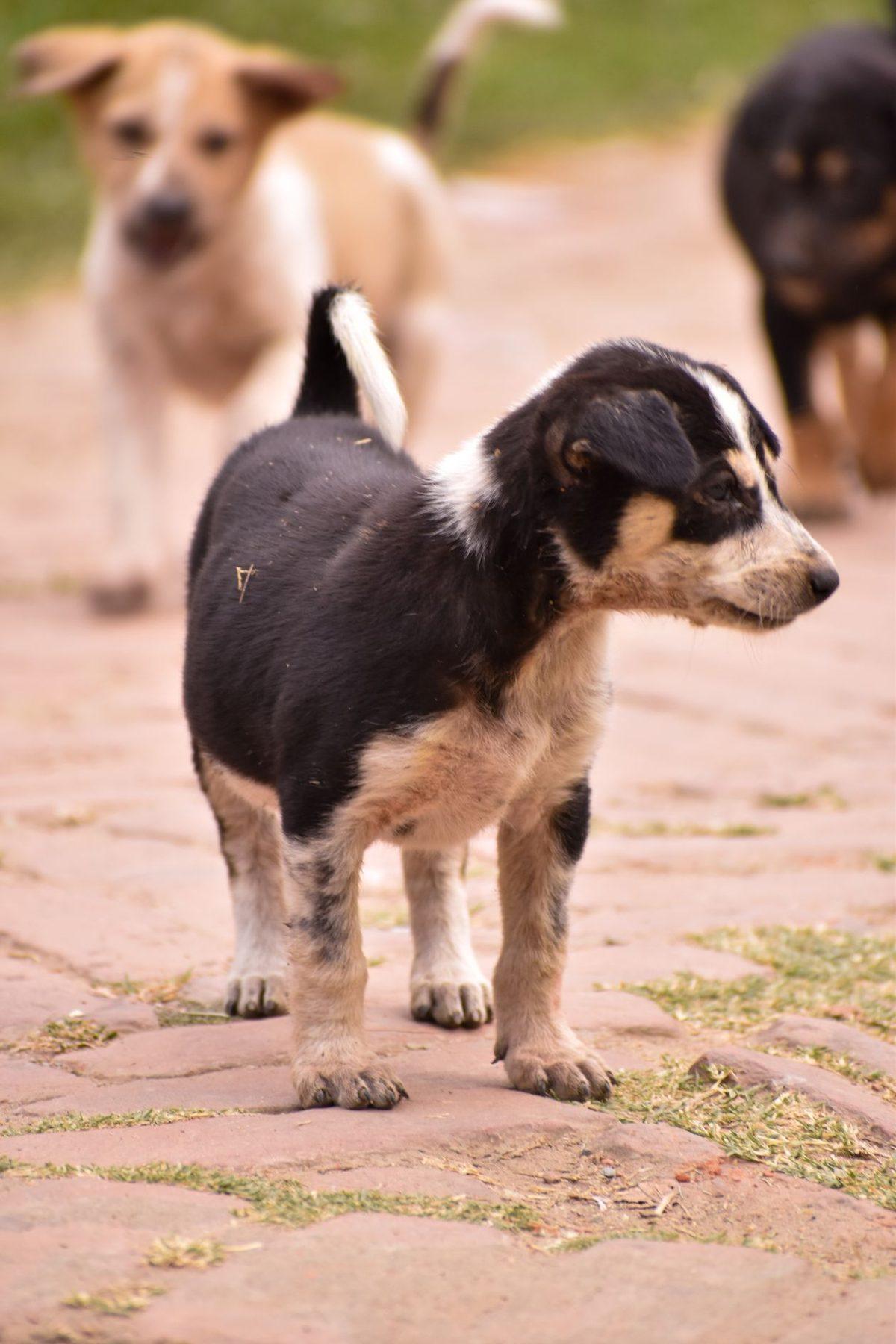
Potty training at 5 months is a specific job with specific numbers. Adult teeth are erupting and chewing peaks. Independence grows — your puppy starts choosing the world over you at times, which is normal development, not defiance. This guide gives you the schedule, the supervision rules, and the accident protocol calibrated to a 5 months puppy — plus what "on track" honestly looks like at this age, so you can stop comparing your puppy to the internet's fastest learners.
Potty Training at 5 months: Step by Step
Run the anchor schedule
Out first thing, after each of the 3 meals (spread across the day), after every nap, after play, and last thing at night. At 5 months, the bladder ceiling is about 5 hours — but treat that as a maximum for a resting puppy, not a plan for an active one.
Reward at the spot
Same door, same patch of ground, on leash, boring wait. The second your puppy finishes, mark "yes" and treat outside. At this age the association is fragile; rewarding at the door instead of the spot is the most common reason progress stalls.
Supervise like it is your job
A 5 months puppy out of sight for two minutes is a puppy choosing a toilet spot you will not like. Use tethering, pens, and baby gates. Watch for circling, sniffing the ground intently, and drifting toward room edges — your three early-warning signals.
Handle night honestly
At 5 months, expect night needs to match the about 5 hours ceiling. Set an alarm slightly before your puppy's usual wake time, take them out silently, and return straight to the crate. Nights consolidate fast when days are structured.
Log accidents for three days
Time, place, and what happened just before. Patterns jump out: the post-play accident, the 20-minutes-after-dinner accident. Close the specific gap instead of overhauling everything. Three days of data beats three weeks of guessing.
What Is Normal at 5 months
Development context: Adult teeth are erupting and chewing peaks. Independence grows — your puppy starts choosing the world over you at times, which is normal development, not defiance. Realistic milestones right now include proofing cues in the garden, structured play with rules, and longer alone time. Puppies develop at different rates by breed and size — smaller puppies often take longer to house train because their bladders are smaller and their metabolism faster. Compare your puppy to their own last week, not to other puppies.
Mistakes to Avoid
- Expecting a 5 months puppy to signal clearly — most cannot yet. Your schedule is the signal until they are older.
- Scolding accidents found later. The puppy cannot connect your anger to an event from an hour ago; they just learn you are unpredictable.
- Giving whole-house freedom because the last two days were clean. Freedom expands room by room after two clean weeks.
Related Guides
Frequently Asked Questions
How long until a puppy is fully potty trained?
Most puppies are reliable between 4 and 6 months, with full physical bladder maturity closer to 6–8 months. At 5 months, judge by trend: accidents per week should be falling steadily. A sudden increase after progress usually means a schedule gap, a growth spurt, or a urinary issue worth a vet call.
My 5 months puppy pees in the crate. What is wrong?
Usually the crate is too big (puppy can toilet at one end and sleep at the other) or the puppy was left longer than their about 5 hours capacity. Add a divider, shorten durations, and clean with enzymatic cleaner. If it persists with correct setup, ask your vet to rule out a urinary tract infection.
Should I use puppy pads at 5 months?
Pads are a valid tool for high-rise living or pre-vaccination constraints, but they teach an indoor toilet that must later be moved outside — a second training project. If outdoor access is possible, direct outdoor training from the start is simpler. If you use pads, place them by the door and transition gradually.
Why does my puppy toilet right after coming back inside?
Usually they did not finish outside (distraction cut it short) or the reward history says the good stuff happens indoors. Stay out two extra minutes after the first toilet, and if it still happens, come in and go straight back out after 10 minutes. It is a phase most puppies exit within a couple of weeks of consistent handling.