
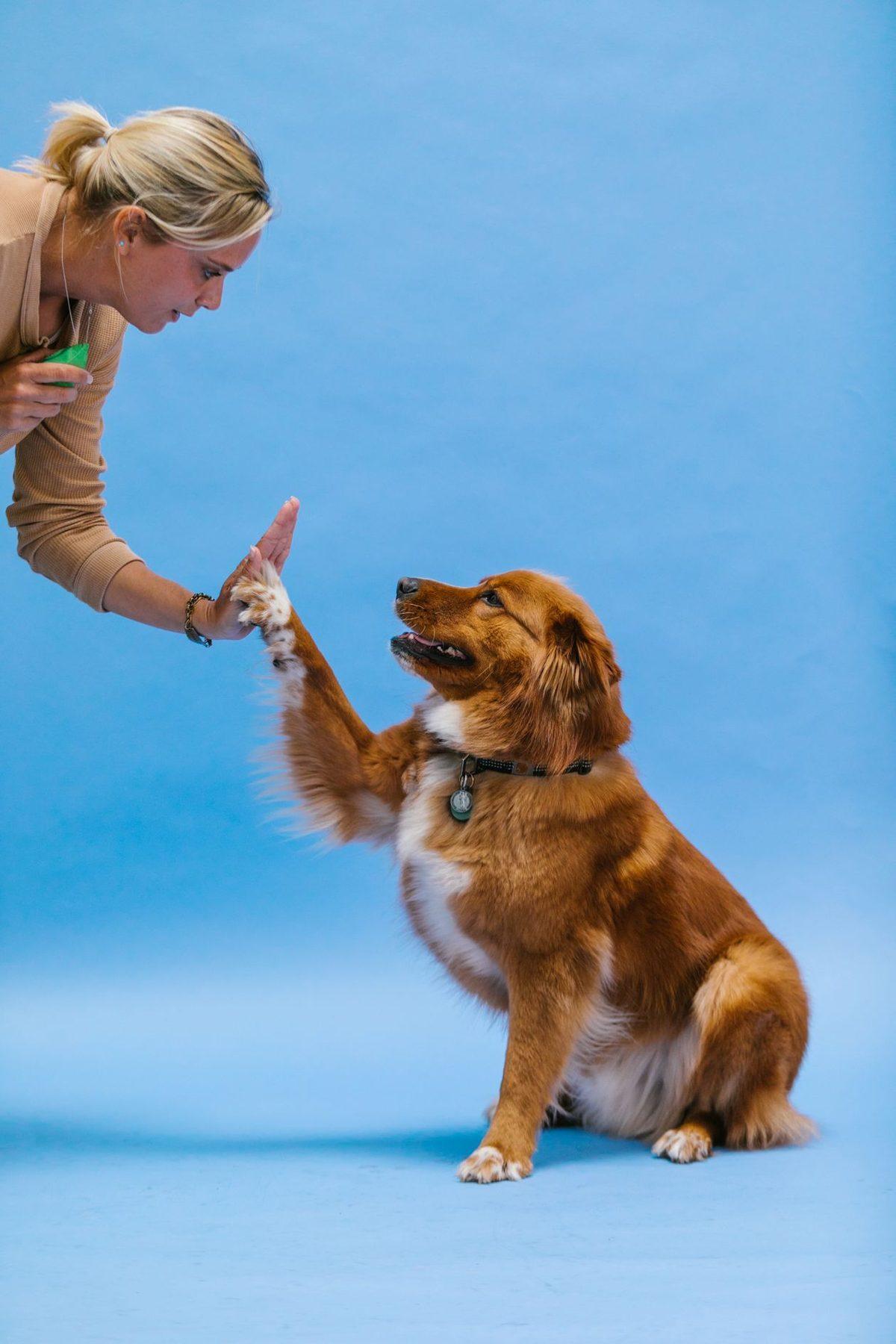
Obedience is a language course, not a dominance contest. Your Poodle is learning that specific sounds predict specific actions that pay. The Poodle is brilliant, athletic, and proud — and understanding that temperament tells you how to pace lessons: their strength is problem-solving intelligence — Poodles often learn a cue in a handful of repetitions, while the friction point is boredom behaviors like barking and creative mischief when under-stimulated. This roadmap sequences the core cues and shows you how to proof them for real life.
The Poodle Plan: Step by Step
Charge the marker and the name
Say your puppy's name; when they look, mark "yes" and treat. Repeat 20 times across the day. Then load the marker word itself the same way. A Poodle who snaps to attention at their name gives you a steering wheel for every cue that follows.
Lure sit and down, then fade the lure
Treat at the nose, move it up and back for sit; down and toward you for down. After five successful lured reps, use the same hand motion empty-handed and reward from the other hand. Add the verbal cue only once the motion works 8 times out of 10 — words added too early become background noise.
Build stay with the 3 Ds, one at a time
Duration first (seconds), then Distance (steps), then Distraction (a dropped toy). Never raise two Ds in the same session. If your puppy breaks, the last increase was too big — drop back to the level they were winning at and rebuild. Always use a release word so "stay" has a clear end.
Teach come as a party, never a punishment
Say the name plus "come" once, run away a few steps, and throw a celebration when your puppy arrives: jackpot treats, play, praise. Never call your puppy to you for anything they dislike. For a Poodle, whose recall will later compete with boredom behaviors like barking and creative mischief when under-stimulated, the cue must have a perfect payment history.
Proof in layers
New room, then garden, then quiet park on a long line. Each new location restarts at easy criteria. Keep a training log: cue, location, success rate. Trainers think in data; a week of notes will show you exactly which layer needs more work.
Pacing Lessons for a Poodle
Session design should match the dog. A Poodle with high energy needs a play or sniff break before focused work, and sessions should end on a win while they still want more. Biddable breeds tolerate more repetitions; independent breeds quit mentally long before they quit physically — for this breed, watch for boredom behaviors like barking and creative mischief when under-stimulated as your signal to lower criteria, raise payment, or stop. As an adult this dog needs 60 minutes daily, and training games count toward that total.
Mistakes to Avoid
- Repeating a cue five times ("sit, sit, SIT"). Say it once; if nothing happens, help with the lure and lower the difficulty.
- Training when frustrated. Puppies read tone and posture instantly; end the session and reset rather than drilling through irritation.
- Skipping the release word, so the puppy decides when stay is over — and practices breaking it.
Related Guides
Poodle Puppy Guide →
All Poodle guides in one place.
Training Fundamentals →
Teach Sit Step by Step →
Reliable Recall Guide →
Frequently Asked Questions
How many repetitions should a Poodle puppy do per session?
Five to ten quality reps per cue, then switch or stop. Quality means your puppy is engaged, taking treats happily, and succeeding at least 80% of the time. Two to five sessions a day of 2–5 minutes outperforms one long weekend drill for every breed, and especially for puppies.
My Poodle knows sit at home but ignores it at the park. Why?
Dogs do not generalize well — "sit in the kitchen" and "sit at the park" are different skills in a puppy's mind. The behavior is not defiance; the context changed. Re-teach at the park starting from the lure stage, and expect to rebuild in each new environment. After three or four locations, generalization starts to transfer.
Should I use treats forever?
No — but fade them intelligently. Move from continuous rewards to intermittent ones once a cue is fluent in a location, and replace food with life rewards (door opens, toy thrown, walk resumes). Keep food in the mix for hard contexts like recall near distractions; even professional trainers pay for high-difficulty work.
What if my puppy gets bored or walks away mid-session?
That is data, not defiance: the session was too long, too hard, or the reward was not worth it. End with one easy rep, note what happened, and adjust the next session — shorter, easier, better pay. Breeds differ in working style; the Poodle's style is shaped by being brilliant, athletic, and proud.