
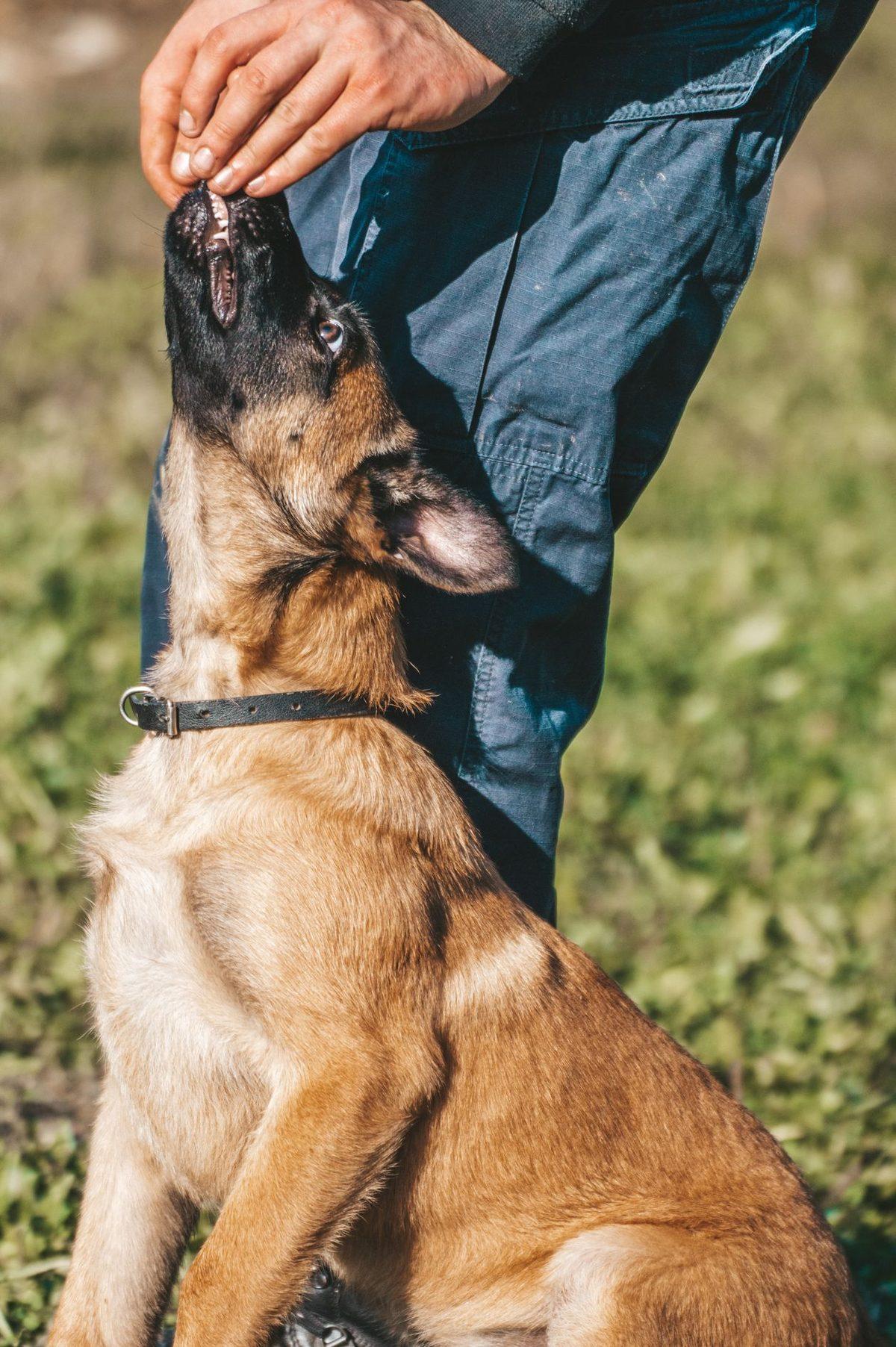
Portion questions have no single number because puppies differ in breed, metabolism, activity, and food calorie density. What exists is a reliable system: a starting estimate, a measurement method, and an adjustment rhythm. This guide teaches the system so you can answer the question for your puppy at every age.
The Plan: Step by Step
Start from expected adult weight
Puppy food labels dose by current age and expected adult size, because a Great Dane puppy and a Beagle puppy of the same age need different growth curves. If you do not know the expected adult weight (mixed breeds), ask your vet for an estimate and revisit it at each visit.
Match meals to age
Four meals to about 3 months, three meals to about 6 months, then two. Same daily total, different distribution. Consistent times make digestion, toilet timing, and appetite monitoring predictable.
Weigh the food
A kitchen scale beats cups for accuracy — kibble sizes vary wildly and "a cup" drifts. Weigh for a week until your eye calibrates, and write the daily grams down. Records turn portion debates into arithmetic.
Run the weekly rib test
Feel the ribs with flat fingers: correct is "easy to feel, slight padding." Seeing ribs means increase by 10%; hunting for them means decrease by 10%. Check the waist from above and the side too. Adjust in 10% steps, one change per week.
Budget treats inside the total
Training treats, chews, and dental sticks are calories. Keep extras near 10% of daily intake, and on heavy training days, spend part of the measured kibble as rewards. Puppies get fat on uncounted extras, not on measured meals.
Growth Rate Is the Real Target
For puppies, especially large breeds, the goal is slow, steady growth — not maximum growth. Overfeeding accelerates growth in ways that stress developing joints and are linked to skeletal problems in big dogs. A lean puppy is a healthy puppy; roundness in a puppy is a portion signal, not cuteness to preserve.
Mistakes to Avoid
- Feeding by current weight on an adult-food chart, or by appetite — many puppies would eat double their needs.
- Free-feeding, which hides appetite changes and fattens food-driven puppies silently.
- Adding toppers and extras without subtracting anything, then wondering about the waistline.
Related Guides
Frequently Asked Questions
My puppy always seems hungry. Am I underfeeding?
Many puppies — especially retrievers and beagles — act hungry at any ration; appetite is not a measuring instrument. Trust the rib test and the growth curve. If ribs are correct and weight gain is steady, the answer is no, however theatrical the performance.
How do I know my puppy's expected adult weight?
Purebreds: breed ranges plus the parents' sizes. Mixed breeds: your vet estimates from current weight and age, refined at each visit. When in doubt between two label rows, start with the lower and let the rib test arbitrate.
Should portions change during growth spurts?
Yes — expect appetite and needs to spike during spurts (often with extra sleep) and dip between them. Adjust by rib test in 10% steps rather than chasing daily appetite. Your vet's growth chart at each visit confirms the trajectory.
What if my puppy refuses the measured amount?
A healthy puppy who leaves a little may simply be self-regulating — or the portion is generous. Rule: food down 20 minutes, leftovers removed, next meal on schedule. Refusing all food for 24 hours (12 for young or toy puppies) is a vet call, not a portion issue.