
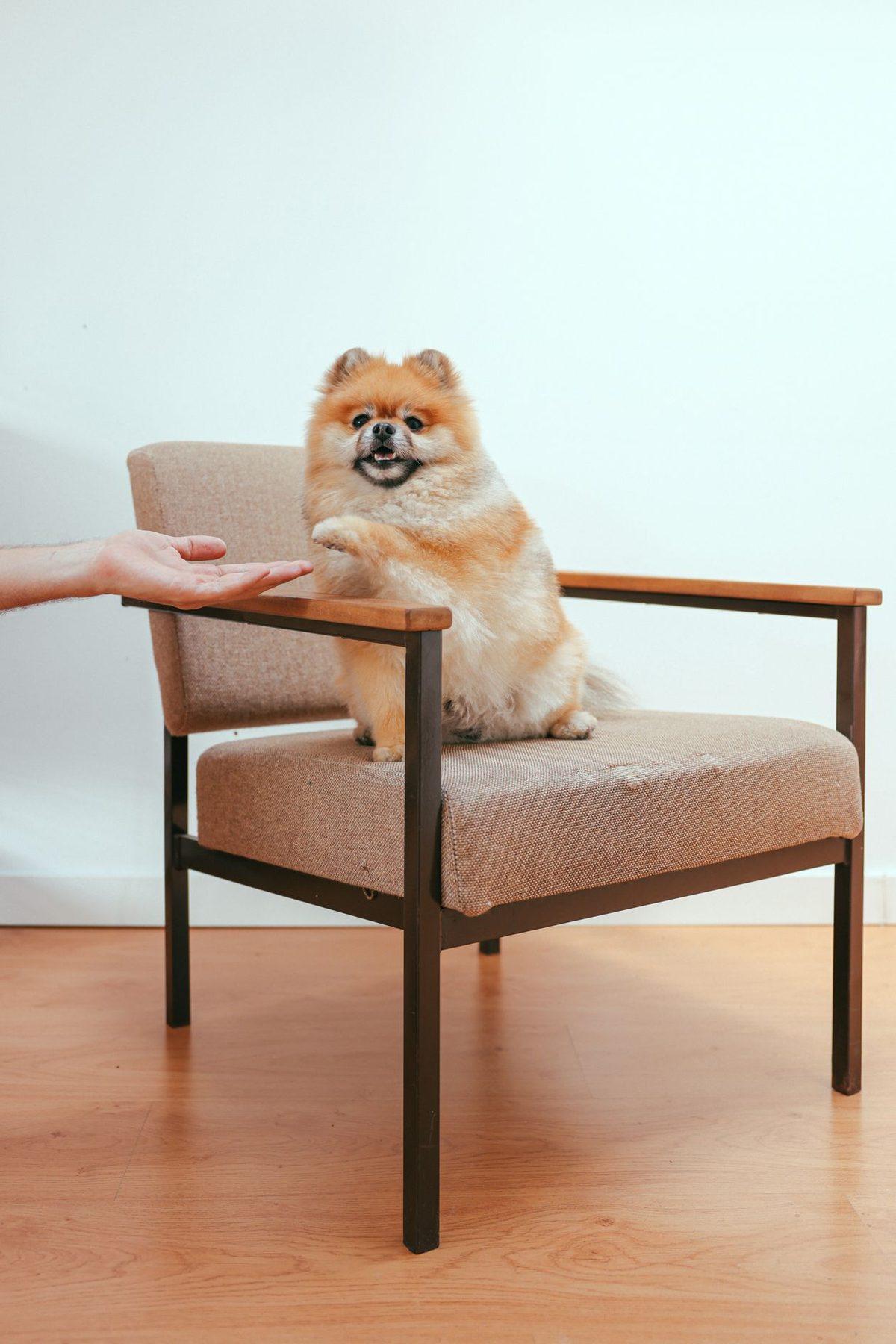
Grooming is trained, not endured. At 1 year your puppy is still forming their default opinion of being handled, and that opinion will be surprisingly permanent. Your dog is a young adult physically (large breeds keep maturing to 18–24 months) with an adolescent brain still finishing development. Training now shifts from teaching to maintaining and enjoying. This guide installs the habits — chin rest, paw handling, brush acceptance, nail routine — at the age when they are cheapest to build.
Grooming & Handling at 1 year: Step by Step
Teach the chin rest first
Puppy rests chin on your palm, treats flow. Chin down becomes "I consent, continue"; lifting it pauses the session. This single behavior transforms grooming and vet exams from restraint battles into cooperative routines.
Handle everything, briefly, daily
Each paw squeezed gently, each ear lifted, lips raised, tail touched — seconds each, food after each. At 1 year, two minutes a day covers the whole map. You are not grooming yet; you are writing the puppy's definition of normal.
Introduce tools one at a time
Brush on the shoulder (least sensitive) for a few strokes, treat, done. Nail clippers appear, click near the puppy, treat — days before they touch a nail. Dryer and clipper sounds start as distant recordings with dinner. One new thing per day, always under threshold.
First bath: short and sweet
Non-slip mat, lukewarm water, puppy shampoo, treats throughout, under ten minutes total. Perfection is irrelevant; your puppy's emotional review is the product. Dry thoroughly and follow with play, so bath day ends as a good day.
Nails: tiny tips, often
One nail a day beats a monthly wrestling match. Trim tiny tips with food after each. Clicking on hard floors means overdue. At 1 year, nails grow fast and puppies are light — walking does not wear them down.
Handling Windows at 1 year
Development context: Your dog is a young adult physically (large breeds keep maturing to 18–24 months) with an adolescent brain still finishing development. Training now shifts from teaching to maintaining and enjoying. Milestones now include a full adult routine: reliable manners, proven recall where legal, and skills maintained with life rewards. The handling you install during sensitive periods becomes the adult default; puppies who miss it can absolutely still learn cooperative care later, but the same work takes weeks instead of days. If your puppy is already showing handling fear, shrink the steps — one touch, one treat — and rebuild.
Mistakes to Avoid
- Pinning a wriggling puppy to "get it done." The groom gets finished; the puppy's trust in handling gets set back a month.
- First grooming experience = full professional groom. Book a short puppy intro visit (bath, brush, treats) instead.
- Brushing only the visible top layer. Mats form at the skin — the comb-to-skin test is the honest standard.
Related Guides
Frequently Asked Questions
How often should I bathe a 1 year puppy?
Every 3–6 weeks unless genuinely dirty. Over-bathing strips skin oils and can cause the itchiness owners then bathe more to fix. Spot-clean between baths and brush more — brushing distributes oils and does most of the real hygiene work.
My puppy bites the brush. What should I do?
Check for pain first — brushing over mats hurts. Then shrink the job: one stroke on the shoulder, treat, stop, while the puppy is sleepy. A lick mat on the floor gives the mouth legal work. If biting escalates with stiffening or growling, pause and consult a certified trainer; handling aggression is trained, not wrestled.
When do puppy nails need trimming?
Every 1–2 weeks at this age. Fast growth plus light body weight means little natural wear. Frequent tiny trims keep the quick short, sessions brief, and the habit boring — the three things that make adult nail care trivial.
What is cooperative care and why does it matter?
Training the dog to participate in their own care — chin rests for exams, voluntary nail sessions, muzzle comfort — instead of being restrained through it. It reduces stress for the dog, injury risk for handlers, and makes medical care faster and safer for the dog's whole life. Starting at 1 year makes it nearly effortless.