
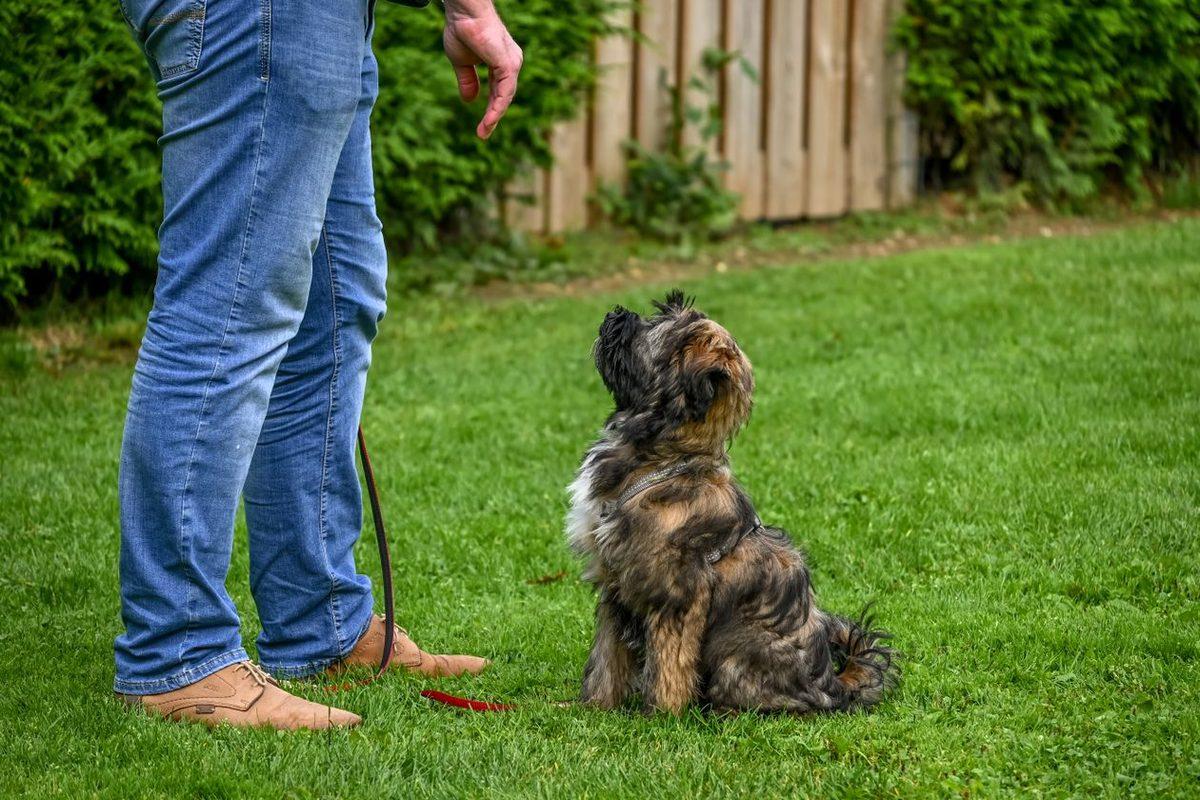
Door dashing is the behavior problem that can end in traffic, which makes it a safety system, not a manners nicety. Puppies dash because doors predict the most exciting place in the world and nobody taught them the door has rules. This guide builds both layers: hardware that makes a dash impossible today, and training that makes it unlikely ever.
The Plan: Step by Step
Install the safety layer today
A gate or exercise pen creating an airlock at main doors, leashes hung at the door, and a household rule: doors open only when the puppy is behind the barrier, on leash, or with a designated holder. Deliveries and guests are the classic breach moments — plan for them explicitly.
Teach the threshold game on leash
Leash on, puppy beside you, hand on the knob. Crack the door two inches. If the puppy surges, the door closes gently (never on the puppy). If they wait, mark, treat, and sometimes release through. Ten reps take three minutes; do them daily at every exterior door.
Add a door station
A mat or bed several feet from the door becomes the puppy's assigned spot when doors open. Train it separately (go to mat, stay, door sounds), then combine. The station gives guests, deliveries, and kids a workable routine instead of chaos.
Proof with staged distractions
Doorbell recording, a family member outside, a friend arriving — one layer at a time, puppy on leash or behind the gate. Real life should never be the first test of a new layer. Reward waiting like it is the best trick your puppy knows, because functionally it is.
Build the emergency backup
A bombproof recall and a "wait" cue are your insurance if management ever fails. Practice recall games daily. Also teach a boundary at the garden gate and car door — every threshold gets the same rule, so the puppy learns a principle, not a location.
Why Puppies Dash
Dashing is exploration plus opportunity, and it peaks in adolescence when confidence and independence surge. Breeds bred to range (hounds, sporting dogs) dash with more commitment, but any puppy will take an open door to an interesting world. Treat every exterior door as a permanent training site — the habit of waiting should outlive the puppy phase by years.
Mistakes to Avoid
- Chasing a puppy who got out — chasing reads as a game and pushes them farther. Run away or crouch and call instead.
- Testing the training with real guests before staged proofing is solid.
- Punishing a puppy after catching them outside; the lesson lands on being caught, not on dashing.
Related Guides
Frequently Asked Questions
What should I do if my puppy gets out?
Do not chase. Crouch sideways, call once in a happy voice, and run the other way — most puppies chase you. If they head for danger, recruit help and herd rather than grab. Once safe, no punishment: review which layer of the system failed and fix that layer today.
How long until door manners are reliable?
Expect a working wait at quiet doors within 2–4 weeks of daily reps, and several months of proofing before trusting it with exciting arrivals — and keep the physical barrier as backup regardless. Reliability is a slope, not a switch; manage as if the puppy will dash until they have months of evidence otherwise.
Does this work for garden gates and car doors too?
Yes — same protocol, every threshold: the barrier opens only for a waiting dog. Car doors deserve special care: puppy clipped or crated before any door opens at a destination. Consistency across thresholds is what turns a trick into a principle.
My puppy dashes at one specific door. Why?
Usually that door predicts the best stuff — the front door means walks, visitors, and the street show. Give that door extra reps and extra management, and sometimes exit it for boring reasons (a two-minute sniff in the front garden) so its meaning dilutes.