
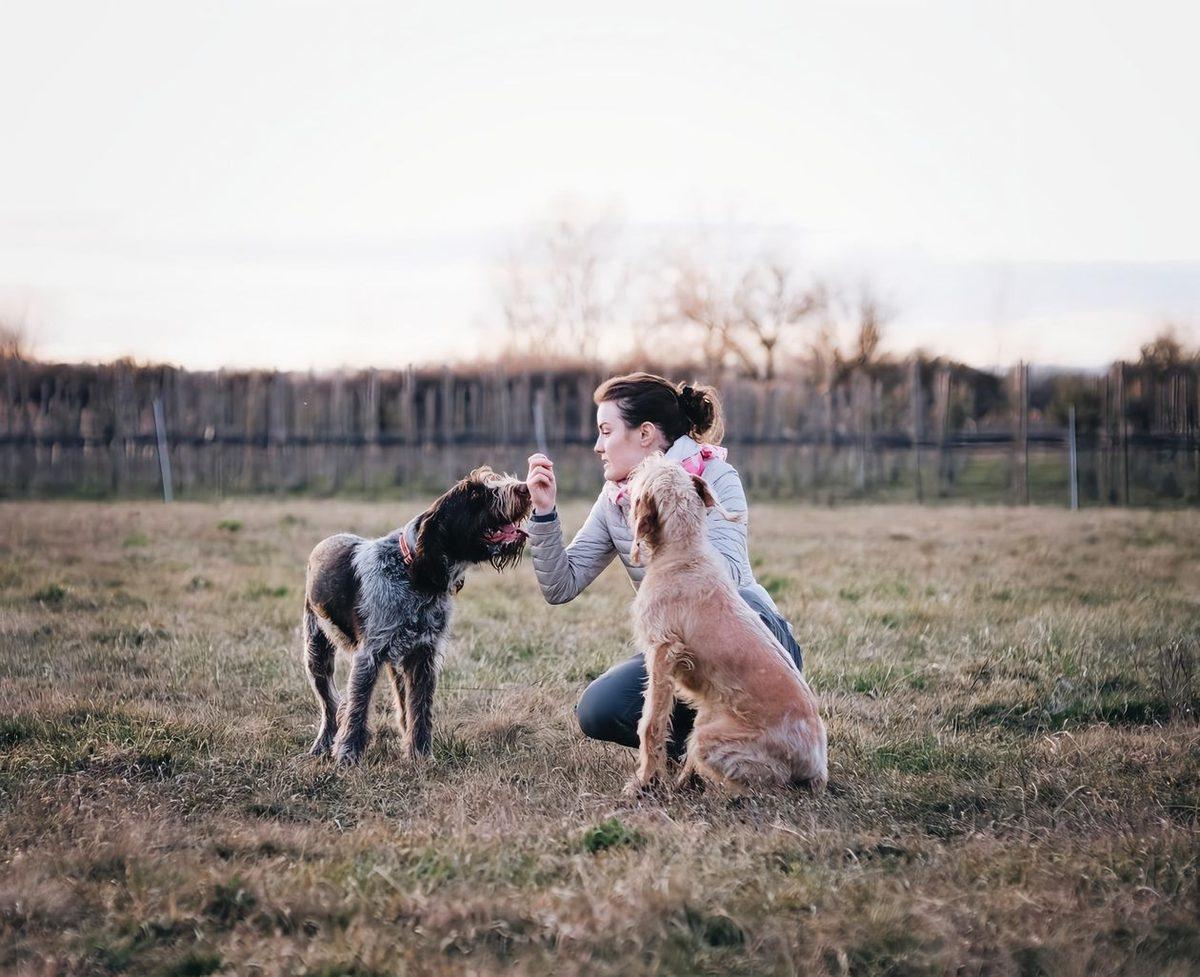
Loose-leash walking is a trained skill, not a personality trait — and the Border Collie brings specific raw material to it. This breed is intensely driven, observant, and sensitive to movement, and their advantage is unmatched responsiveness — they read tiny changes in your body language. The challenge you will meet on walks is chasing cars, bikes, and children, plus herding and nipping heels without an outlet. Because a Border Collie grows to 30–55 lb, habits built at 10 lb are the ones you will live with at full size, so the plan below front-loads the right mechanics.
The Border Collie Plan: Step by Step
Fit the right equipment
For a medium puppy, start with a well-fitted harness with a front clip option and a standard 4–6 foot leash — never a retractable leash, which teaches constant tension. Check the harness weekly; puppies outgrow fittings fast, and a rubbing harness creates negative associations with walk time.
Teach "beside me pays" indoors
With your puppy on leash in a hallway, take one step. If the leash stays loose and your puppy moves with you, mark "yes" and treat at your seam line — the position you want to reinforce. Five steps, ten steps, then turns. Indoors first means zero competing smells while the pattern forms.
Use the tree rule outside
The moment the leash tightens, stop and become a tree. The instant your puppy turns back or the leash slackens, mark and move again. Pulling must never produce forward motion; slack always does. Expect the first outdoor sessions to cover very little ground — that is normal and temporary.
Pay for check-ins
Every time your Border Collie glances up at you voluntarily on a walk, mark and reward. Voluntary attention is the foundation that later holds up around dogs, people, and traffic. Given this breed's tendency toward chasing cars, bikes, and children, plus herding and nipping heels without an outlet, check-ins are your early-warning system and your steering wheel in one.
Build distance and difficulty slowly
Master your street, then a quiet park, then busier areas — one variable at a time. Keep total walks age-appropriate: roughly five minutes per month of age, twice a day, protecting growing joints. A Border Collie will need 90–120 minutes daily as an adult, but puppy walks are for training and sniffing, not mileage.
Walking a Border Collie: What Is Different
Breed build changes leash work. A Border Collie wearing a medium double coat needs heat and friction awareness: check harness rub points after every walk in warm weather, and keep midday walks short. Pulling mechanics also differ by size — a medium dog at 30–55 lb can injure a shoulder with one lunge, so the front-clip harness and the tree rule are safety equipment, not just training preferences. Breed health note: Ask your vet about eye screening (collie eye anomaly) and hip checks; mental work matters as much as physical exercise.
Mistakes to Avoid
- Jerking or "correcting" with the leash. It creates conflict around triggers and can injure a puppy's neck; redirection and distance work better.
- Walking the same exciting route daily before skills exist — novelty overload guarantees pulling practice.
- Letting the puppy greet every dog on leash. On-leash greetings are a top cause of leash frustration; teach calm passing first.
Related Guides
Border Collie Puppy Guide →
All Border Collie guides in one place.
Complete Leash Training Guide →
Heel Command Guide →
Leash Reactivity Help →
Frequently Asked Questions
Why does my Border Collie puppy sit down and refuse to walk?
Freezing is usually overwhelm, uncertainty, or discomfort — not stubbornness. Check harness fit, heat, and paw pads. Crouch sideways, wait, and reward any step toward you. If your puppy freezes at the same spot daily, that location is over threshold; start walks from a calmer point and build toward it.
Harness or collar for a Border Collie puppy?
A harness for walking — it removes pressure from a developing neck and trachea. Use the collar for ID tags only. For strong pullers, a front-clip harness adds steering leverage without pain. Whichever you choose, fit two fingers snugly and re-check weekly during growth spurts.
How do I stop my puppy lunging at other dogs on walks?
Work at a distance where your puppy can see the dog and still take treats — that is your training distance. Reward looking at the dog, then looking back at you. Close the distance over sessions, not minutes. If lunging includes hard staring, raised hackles, or inability to eat, work with a certified trainer; our leash reactivity guide covers the full protocol.
When will walks actually become enjoyable?
Most owners see a real shift between 4 and 6 months: the pattern clicks, check-ins become automatic, and you can start enjoying distance. Adolescence (6–14 months) brings a temporary relapse in most breeds — keep sessions short and criteria easy during that window rather than escalating corrections.