
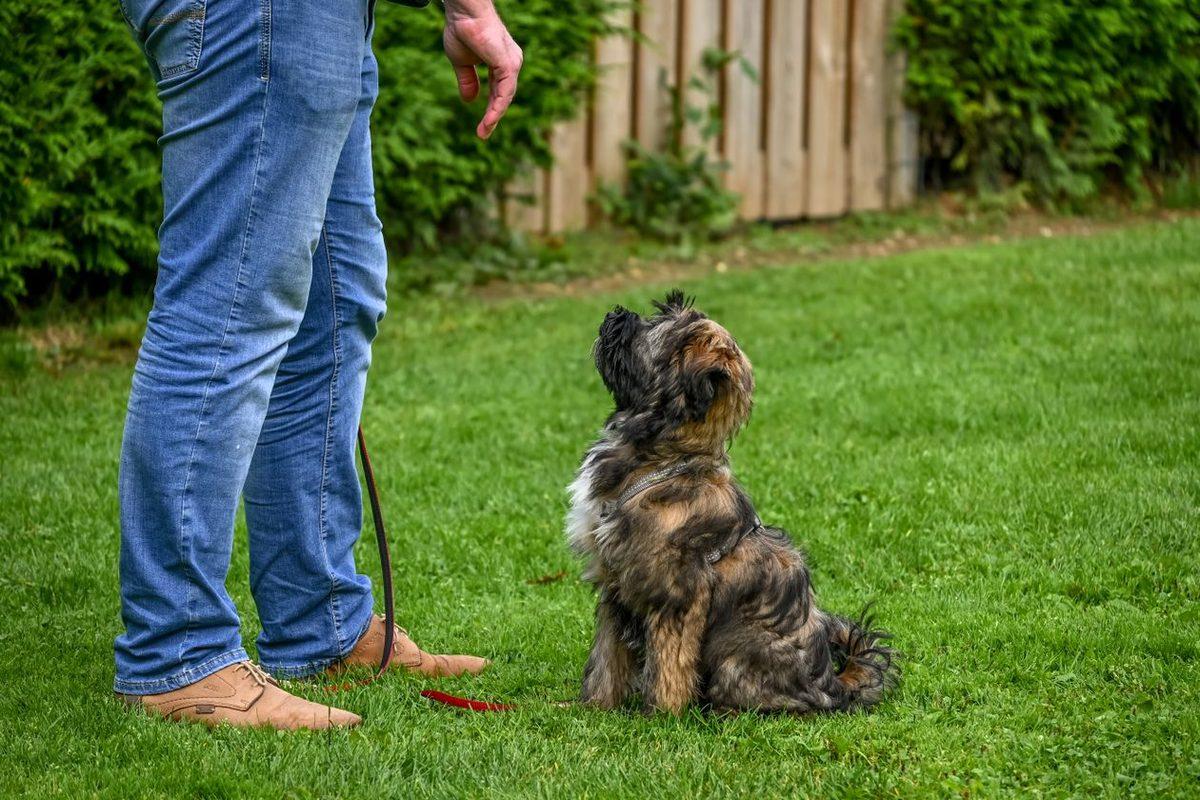
The walk starts well, then your puppy notices the leash, grabs it, and suddenly you are playing tug in the street while they bounce like a fish. This is one of the most normal adolescent behaviors there is — and one of the most fixable once you treat it as an arousal problem rather than a leash problem.
The Plan: Step by Step
Read the trigger pattern
Leash biting usually ignites at predictable moments: leaving the house, seeing a dog, being turned toward home, or when the walk has gone too long. Log your trigger points for three walks — the fix is applied at those moments specifically, not across the whole walk.
Carry a legal tug toy
When the frenzy starts, offer the toy and play a brief, structured tug (with a drop it), then ask for a few steps of walking and reward. You are not rewarding the biting — you are giving the arousal a legal channel and then re-engaging the walking behavior.
Pay for the boring parts
Treats for walking with a loose leash and four paws down, delivered at your seam line every few steps at first. Puppies repeat what pays on walks too. Many leash-biters have simply never been paid for the alternative — the walk itself was assumed to be the reward.
Shorten and calm the walk
If biting starts at minute fifteen, walk twelve. Add sniffing stops, choose quieter routes, and avoid the highest-arousal triggers while skills are young. A shorter, successful walk trains more than a long one that ends in a leash war.
Make the leash itself boring
A chain leash section or bitter spray helps some puppies, but the durable fix is behavioral: when teeth touch leash, all fun pauses — you become a statue until the leash drops, then walking and rewards resume. Consistency across every walker matters.
Arousal, Not Attitude
Leash biting clusters with the other arousal-overflow behaviors: jumping, mouthing hands, and zooming. They share one root — a young nervous system flooded past its coping capacity — and one treatment family: lower intensity, shorter sessions, more sleep, and paid calm. Puppies who bite leashes are usually puppies who need less walk and more nap, which surprises everyone.
Mistakes to Avoid
- Playing along with the tug — the most natural human response and the one that installs the habit.
- Jerking the leash out of the mouth or scolding; arousal plus conflict escalates the frenzy.
- Walking farther to "burn it off" — fitter arousal, same problem, now with more stamina.
Related Guides
Frequently Asked Questions
At what age does leash biting stop?
It typically fades between 6 and 12 months as arousal control matures, provided it is not being rehearsed and rewarded daily. Puppies whose leash biting was played with can carry it into adulthood as a learned game — the behavior is easy to retire early and surprisingly sticky later.
Is a chain leash a good solution?
It removes the pleasant tug texture for some puppies and is a reasonable management aid. It does not teach anything, so pair it with the arousal plan. Watch weight and teeth — a determined puppy can still chew a chain, and metal on teeth is not ideal for heavy biters.
My puppy bites the leash only when we turn for home. Why?
Turning home is a frustration spike — the fun is ending. Practice U-turns mid-walk that lead somewhere good (a sniff spot, a treat scatter) so turning stops predicting loss. Also check total walk length: end-of-walk biting is often tiredness wearing a disguise.
Should I use a head collar to stop it?
Head collars are a steering tool for pulling, not a leash-biting fix, and they require their own careful conditioning. For biting, the toy redirect, arousal management, and paid calm walking solve the actual mechanism. If pulling is also severe, discuss equipment with a qualified trainer.