
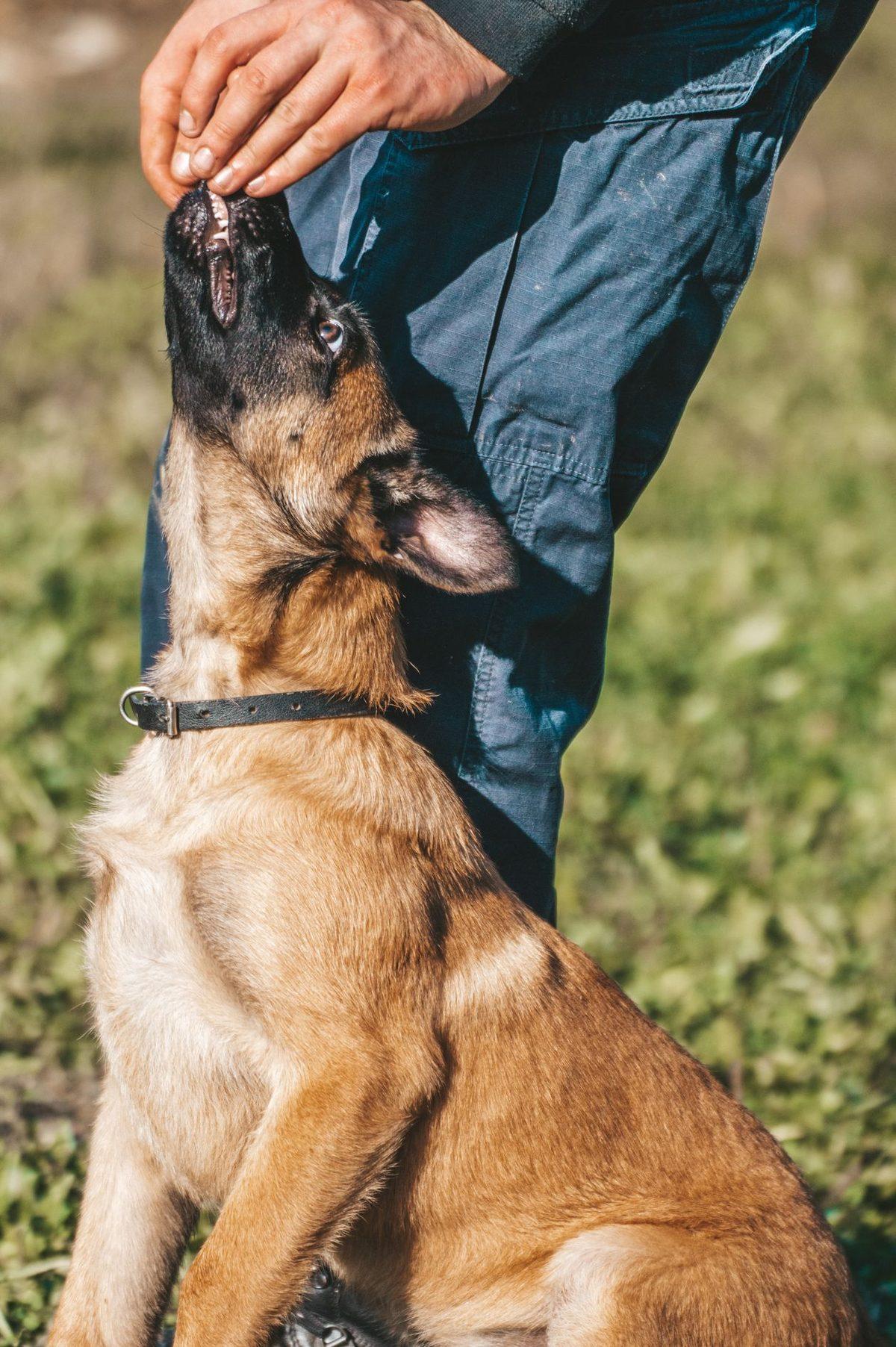
At 4 months, biting worries more owners than any other behavior — usually unnecessarily. Teething is in full swing and vaccine series are usually complete, opening up the wider world. Confidence typically surges — a good month for first classes and busier environments. This guide explains what your puppy's mouth is doing at this exact age, how teething changes the picture, and the feedback routine that builds a soft mouth.
Biting & Teething at 4 months: Step by Step
Feed back on pressure, not contact
When teeth press hard, one "ouch," go still, withdraw for 10–20 seconds, resume. Gentle mouthing during play can continue — puppies who get feedback on pressure learn bite inhibition; puppies punished for all contact learn nothing about pressure at all.
Redirect before you need to correct
Keep a toy within reach everywhere. A 4 months puppy heading for hands or sleeves gets the toy offered first. Puppies bite most when aroused or tired — redirect early, while they can still choose.
Soothe the teething mouth
Frozen wet washcloths (supervised), chilled rubber teething toys, and frozen carrot pieces give sore gums legal work. During peak teething weeks, expect chewing intensity to rise and plan more frozen options, not more scolding.
Enforce the nap connection
Track biting against sleep: at 4 months your puppy needs 17–19 hours of sleep, and the worst biting almost always happens in the last hour before a crash. An enforced nap is the highest-success "biting intervention" there is.
Protect kids with structure
Children move and sound like prey toys. Teach the freeze-like-a-tree response, run interactions through fetch and trick games, and separate puppy and kids with a pen when arousal climbs. Supervision is not a phase; it is the system until both sides mature.
Mouths at 4 months
Development context: Teething is in full swing and vaccine series are usually complete, opening up the wider world. Confidence typically surges — a good month for first classes and busier environments. Baby teeth (28) give way to adult teeth (42) between roughly 12 and 24 weeks, so if you are in that band, you are in peak teething. Milestones around now: reliable basic cues at home, longer leash walks, and calm behavior in a puppy class. Watch for retained baby teeth at the 6-month vet check — they trap food and misalign adult teeth.
Mistakes to Avoid
- Holding the muzzle or forcing fingers — confrontational handling escalates biting and erodes trust.
- Rough hand-wrestling games that pay the puppy for exactly the behavior you are trying to retire.
- Assuming biting means aggression. True aggression in a young puppy is rare and looks different: stiff body, hard stare, bites that break skin with intent. That picture needs a professional, promptly.
Related Guides
Frequently Asked Questions
When does puppy biting stop?
Biting peaks in the early weeks, improves as bite inhibition lands (usually clearly by 16–20 weeks), flares again during peak teething, and settles by about 6–7 months in most puppies. The trend matters more than any single day — keep a rough weekly tally and you should see it falling.
My 4 months puppy bites when excited on walks. Help?
That is arousal overflow, common at this age. Lower the walk's intensity: shorter route, more sniffing, a carried tug toy for redirection, and a calm-down pause when you see the escalation signals (grabbing clothes, jumping, leash biting). End walks before the frenzy, not after.
What chews are safe at 4 months?
Size-appropriate rubber toys, stuffed food toys, and vet-approved puppy dental chews. Avoid cooked bones, antlers, and very hard nylon — fractured puppy teeth are common. Supervise all chewing and remove anything that breaks into swallowable pieces.
Should I yelp like a puppy when bitten?
A sharp "ouch" works for many puppies; some get more excited by high-pitched sounds. If yelping winds your puppy up, switch to a calm, boring withdrawal — stand up, fold arms, become furniture for 20 seconds. The consequence (fun stops) teaches; the sound is optional.