
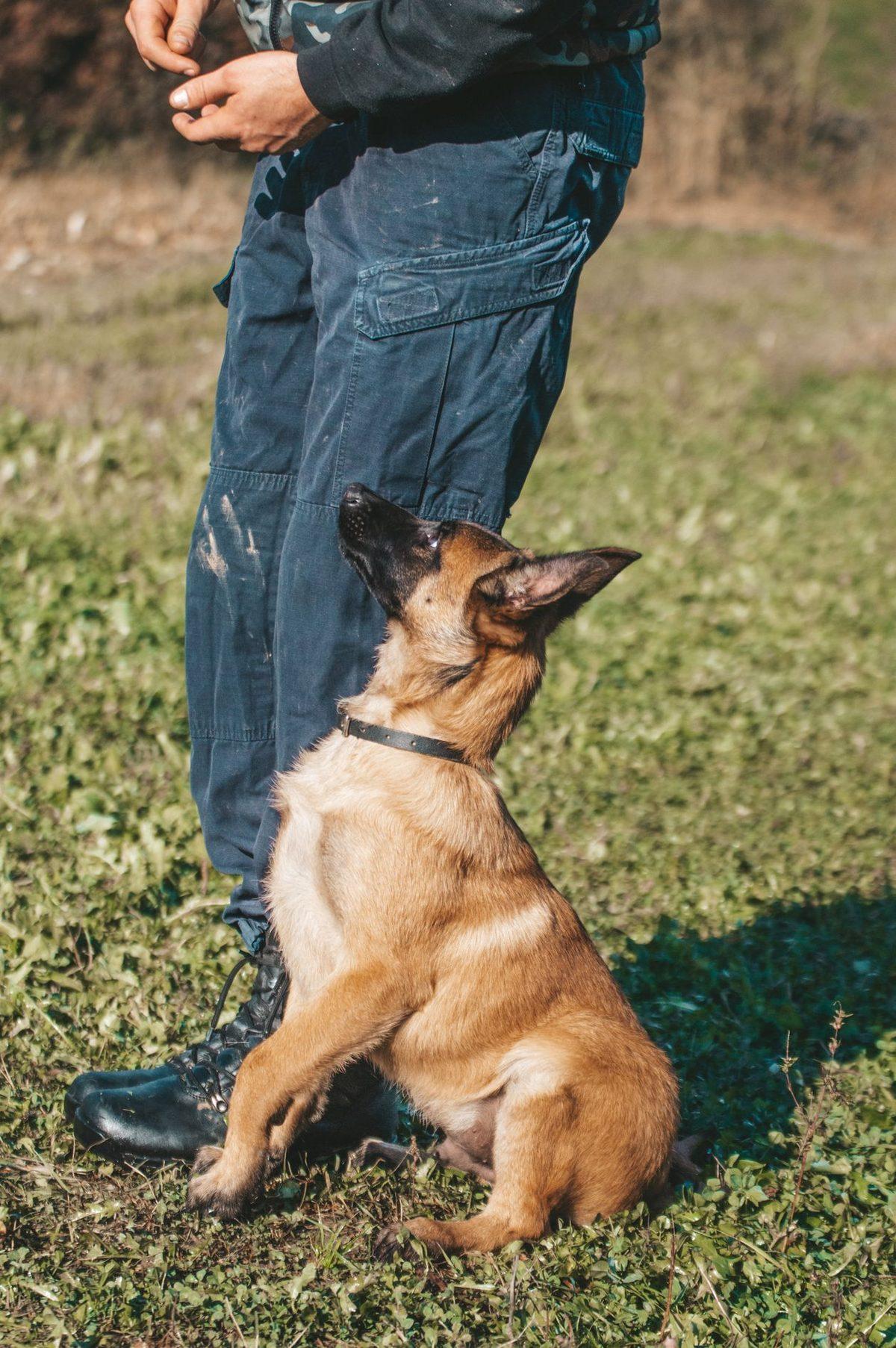
Training at 8 weeks is about installing the learning system — marker, rewards, session rhythm — more than collecting cues. Your puppy has just left their litter and is in the heart of the socialization window. The first fear period often lands around 8–11 weeks, so new experiences should be gentle and chosen carefully. This guide sequences the right skills for this age, in the right session sizes, with milestones you can actually measure.
Basic Commands at 8 weeks: Step by Step
Charge the marker and name first
Name, look, mark "yes," treat — twenty reps a day in quiet moments. At 8 weeks, attention is the curriculum. A puppy who whips around at their name is ready for everything else; a puppy who does not is telling you to stay on this step.
Lure the foundation cues
Sit (treat up and back), down (treat down and in), hand target (treat for nose-to-palm). Keep sessions to 1–2 minutes and end on a win. Add verbal cues only when the motion succeeds 8 of 10 times — words before understanding become wallpaper.
Make recall a party game
Hallway relays between two people, hide-and-seek with easy hiding spots, jackpot rewards. Never call your 8 weeks puppy for anything unpleasant. The recall you build as a game now is the emergency brake you rely on for years.
Introduce stay in seconds
A sit, a breath, release and reward. Duration in seconds, distance in single steps, one variable at a time. At this age, a five-second stay with a clean release is excellent work — the release word matters as much as the stay itself.
Log progress weekly
Cue, location, success rate out of 10. Puppies this age progress in steps, not slopes — plateaus are normal. The log tells you whether you are seeing a plateau (keep going) or a criteria problem (make it easier).
Attention and Ability at 8 weeks
Development context: Your puppy has just left their litter and is in the heart of the socialization window. The first fear period often lands around 8–11 weeks, so new experiences should be gentle and chosen carefully. Focused attention right now is about 1–2 minutes — plan sessions accordingly and quit while you are ahead. Sleep is the hidden training variable: at 18–20 hours of sleep per day, most "training problems" at this age are actually nap problems.
Mistakes to Avoid
- Long drilling sessions. Ten tired reps teach less than three fresh ones — and teach the puppy that training is boring.
- Comparing to older puppies online. Judge against the milestones for 8 weeks: learning their name, first toilet successes outside, and sleeping in a crate with the door closed for short stretches.
- Adding the verbal cue on day one. Motion first, word second, fluency third.
Related Guides
Frequently Asked Questions
How many training sessions a day at 8 weeks?
Three to six micro-sessions of 1–2 minutes, fitted into daily life — before meals, during play breaks, on toilet trips. Total structured training of 10–20 minutes a day is plenty at this age. Learning also happens in every interaction; consistency of rules teaches more than session count.
My 8 weeks puppy loses focus instantly. Is something wrong?
Almost certainly not — focus at this age is measured in seconds to minutes and is heavily state-dependent (hungry, tired, and excited puppies cannot think). Train after a toilet break and a short play, before meals, in the least distracting room. If focus is absent even then, mention it at your next vet visit.
Should I join a puppy class at 8 weeks?
If the class is positive-reinforcement based, requires age-appropriate vaccinations, and keeps puppies separated for most exercises with brief play, yes — classes teach working around other dogs, the skill home training cannot provide. Avoid classes built on corrections or free-for-all play.
What treats work best for training at this age?
Tiny (pea-sized), soft, and high-value: cooked chicken, cheese, or commercial training treats. Puppies work for frequency, not size — one treat cut into ten pieces buys ten reps. Keep total treats within about 10% of daily calories; at 4 meals a day, you can also spend part of the measured kibble as training pay.